cripticisms
a blog on disability politics
Want to die and want to live better: A suicidal crip perspective on assisted suicide legislation
cherry kaufman writes about disability, care, suicidality, and living as Medical Assistance in Dying (MAID) laws go into effect in Illinois.
By cherry kaufman
Please note: A version of this article was originally posted to cherry’s substack, which you can subscribe to here.
Physician assisted suicide, also known as Medical Assistance In Dying, or MAID, has recently become legal in Illinois, under the name of Deb's Law.
A dear friend and death doula wrote a piece explaining what this legislation means and grounding it in this country's history and present moment. Here, also, is an incomplete list of links to disabled people’s work sharing perspectives on these laws.
I am a suicidal disabled person who is against this legislation. I agree with what so many disabled people have already been saying for years: we should not be talking about the right to die for some, before talking about the resources to live for all. Further, we desire grounded and realistic conversations about suicide, death, disability, and ableism overall. The truth is that these laws will murder disabled people who will be made to believe they/we have no other options. These laws exist because it costs less to kill us than to keep us alive.
When I feel like I want to die, or like I can't envision a future where it's easy or even possible for me to keep surviving, it's not because I am disabled. It's because it's too hard and exhausting, if not impossible, to consistently access the care and supports that I need in order to move my body, get out of my bed, use the bathroom, or do literally anything else that I need or want to do.
I want to die when I lose foundational strands in my delicate and interdependent web of support. I want to die when I'm facing an illness or injury that reminds me of how dangerous and scary it is to be sick or hospitalized while disabled. Death feels like the easier option when the only company that can get me the mobility equipment I need refuses to do so. It is also impossible not to internalize the messages from my communities that my life is not worth protecting or sustaining.
Disabled people are abandoned over and over again. We are abandoned by the systems and structures, but also by those in our most intimate circles of family, friendship, and partnership. Not only does society encourage and sanction our abandonment, but it blames us for it.
There are a lot of reasons why I don't often share with others about wanting to die; it has not proven to be information that others can be trusted with. Many have immediately assumed that the mere fact of being disabled is the reason. This has happened with healthcare providers, mental health and otherwise, as well as people I am in close relationship with. Many other people have received the share of my suicidality with silence or minimization and shut down. Some have gone right to pathologization, violating confidence and consent to share my disclosure with others out of "concern" while refusing to talk to me directly about any of it. For many it will just be too much or too uncomfortable.
The disorienting irony of these interactions is that nobody actually acknowledges or asks more about the many types of pain I am in that make me feel like I want to die. They do not offer support to make my life easier. They try to talk me out of my feelings. They willingly ignore the aspects of my lived reality of immobility, chronic pain and profound trauma that contribute to my feeling that this life is just too heavy and too hard to endure.
There are parts of me that want to die. There are also many parts of me that want to live. I actually do want to survive. I want to live when I am hugging a safe, beloved friend or family member. I love life when I am cooking food in my kitchen, especially when it is vegetables and herbs someone brought me from their garden. I love music and words and sounds. I believe in magic, especially my own. I am enchanted when I hear birds chirping back-and-forth to each other. I love creating art and putting it out into the world, and hearing about how it touches or speaks to people.
I have been mostly isolated in my home since 2020, in an ongoing attempt to avoid infection, COVID-19 or otherwise. When COVID hit, I understood immediately that an infection, coupled with medical ableism and rationing of care, would very likely be a death sentence for me. My practice of taking strict and ongoing precautions and permanently restructuring my life is an affirmation to myself and others that my life is, in fact, worth saving and living, despite what society believes.
Aside from being significantly disabled, I am someone with immense amounts of privilege. I am white, I have health insurance, stable housing and no student debt. Life is objectively a lot easier for me than it is for my disabled peers who are much more marginalized than me.
Even still, there have been times in my life when I've been struggling with sickness, injury, or lack of adequate care, where if someone had offered me a painless way to end my life, I would have said yes please.
I am thinking about Jerika Bolen, who died in 2016. Jerika was a 14-year-old Black girl with Spinal Muscular Atrophy who lived in Appleton, Wisconsin- a place where confederate flags still fly in front of houses. She entered hospice care, ceased her ventilator treatment, and ended her life. Her white adoptive mother and her care team supported and encouraged her decision to die. Her story received national attention when an elaborate prom was planned for her as her last/dying wish. So many of us from disabled community wrote letters of love and support to Jerika, hoping that she might decide it was worth staying alive. She could still be here with us. She just needed more support and better options. I can't help but wonder how it would've felt to her if her classmates had shown up with the same type of enthusiasm to support her in life as they did to support and celebrate her death.
This kind of legislation passing right now is especially terrifying six years into the COVID 19 pandemic which continues to reveal society's eagerness to fully abandon disabled people overall. This legislation will further institutionalize and fortify the eugenic agenda of this capitalist hellscape, and disproportionately kill Black and Brown disabled people.
Assisted suicide legislation, in addition to anti masking laws, vaccine rationing, and other pandemic denialist policies, all have disproportionate deadly impacts on Black and Brown communities, especially queer and trans and disabled communities. A country where Black birthing parents die at 3 times the rate of their non Black counterparts (as a result of medical racism, negligence and denial of Black pain) is not a country that can be trusted to responsibly administer guidance and drugs for medically assisted death. A country that bans abortion and criminalizes miscarriages does not care about respecting dignity or bodily autonomy.
MAID legislation frames suicide as a solution to disabled suffering. It is disguised as a form of care on the surface while actually aiming to completely eradicate disability which is, ironically, impossible. In fact, we will only continue to see a dramatic increase in significantly disabling conditions the longer we allow viruses -and misinformation about them- to continue to be spread.
MAID exists for a number of reasons that I acknowledge and validate. The framing that legal MAID is only to kill disabled people to discard them, excludes the wishes and perspectives of terminally ill people.
While it is not my experience, I can acknowledge the visceral pain and unbearable suffering that dying of a terminal illness can bring. I think that steps toward decriminalizing suicide overall should be prioritized. I deeply believe in people's right to choose their own pain management. I believe that death with dignity and dignity of risk must be considered just as much as the right to flourish and be kept alive by all means possible as sick and disabled people.
With this legislation, the government sends the message that assisted suicide is not a question of individual choice or decision but rather, the medical industrial complex’s specific determination of how much disability or illness is worth living. In passing the legislation, the government uses these “medical truths” to assert control over people’s bodies and shed their responsibility to improve resources for living in our increasingly precarious present.
We need resources for staying alive, and initiatives that provide choice, autonomy, dignity, and abundant and holistic care for everyone. Instead of continuing to collectively abandon disabled people, we need to listen to disabled people telling us about what it will take for all of us to survive.
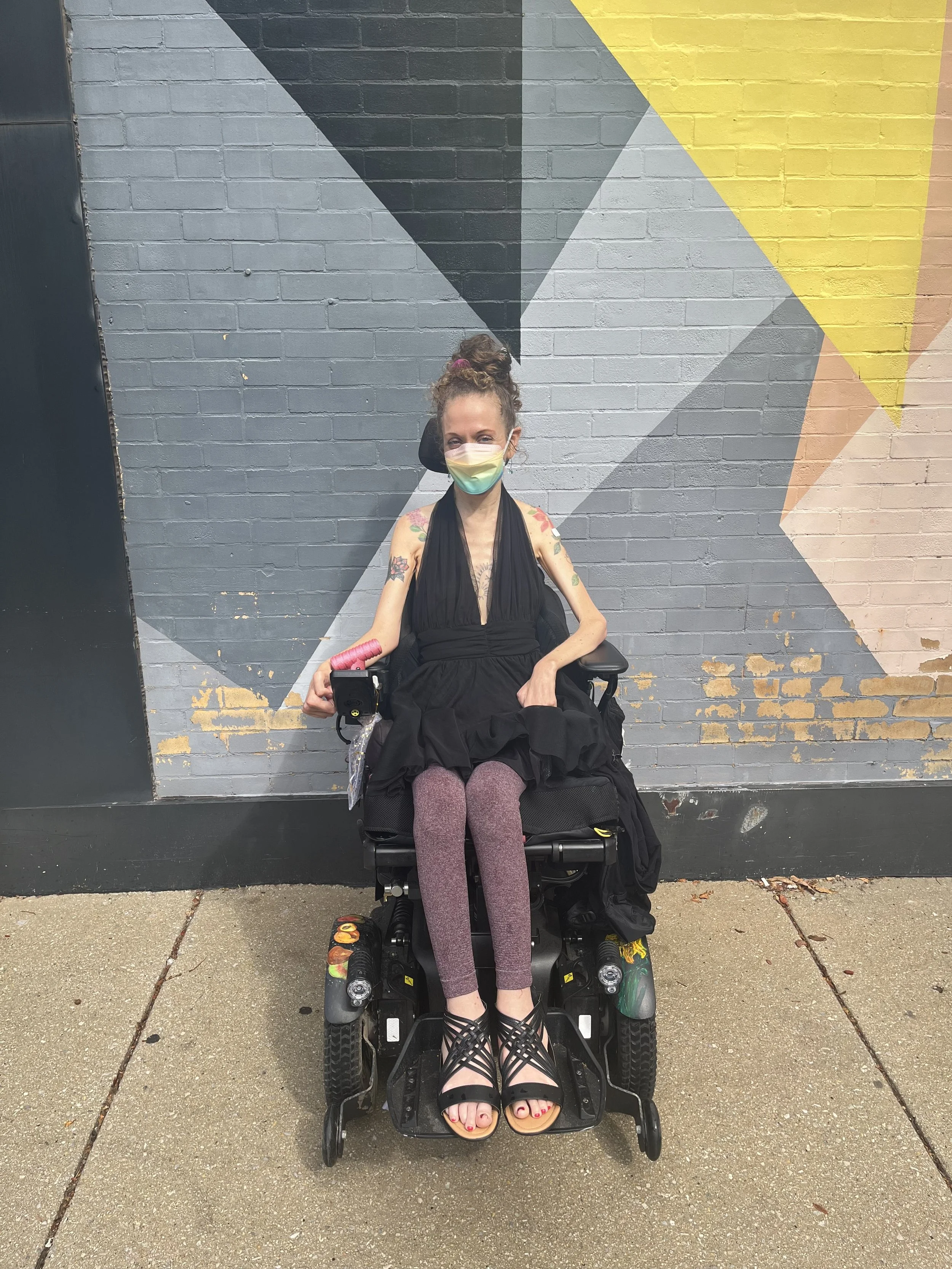
cherry is a queer, disabled, white, Jewish writer and kitchen witch. She lives in Chicago and is the creator of DisabledParts, a website exploring disabled sexuality and relationships. She is an ANTE-UP and AASECT certified sexuality educator, and a death doula who prioritizes creating spaces for other disabled survivors. She is an Aries with a Sagittarius rising and a cancer moon. She treasures deep and authentic relationships with friends, plants, and ancestors. Slice-of-life anime and nature documentaries are the things she watches when she needs to be soothed, and breakfast with tea is her favorite part of the day. Her work explores disabled embodiment, erotics, survivorship, feeding people, care, and intimacy as well as Jewish magic and spirituality.
Alice Wong was Really, Really Cool
Reflections on the life and legacy of Alice Wong, disability activist and media maker.
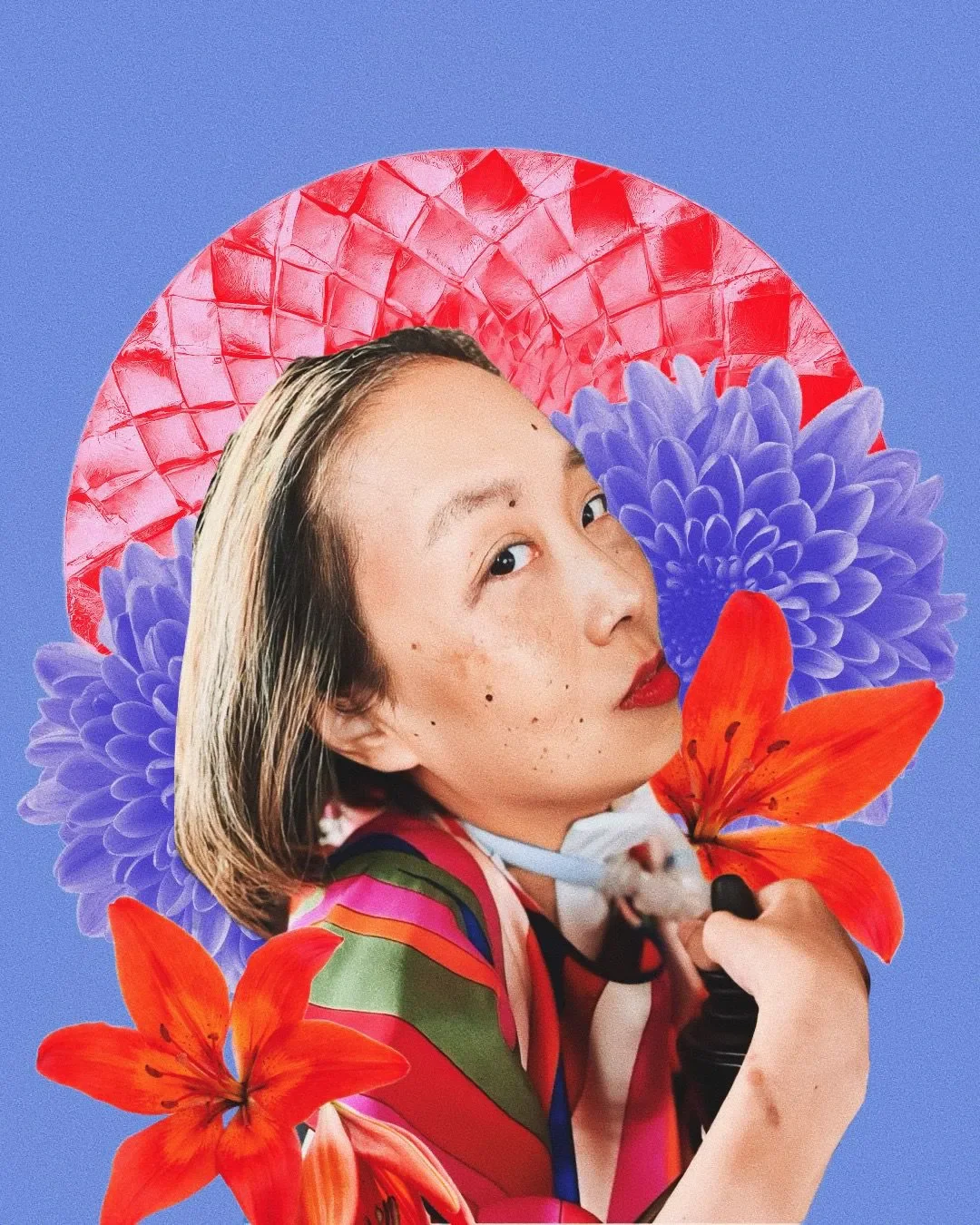
Digital portrait by Jen White-Johnson featuring a photo of Asian American woman with honey blonde hair. She is in a wheelchair and there is a tracheostomy at her neck connected to a ventilator. She is wearing a silky multicolored shirt and a bold red lip color. She is looking intently at the camera with the heat of a thousand suns. Behind her are red and purple flowers with a red circle in the background framing her face like a warm sun. The background of the portrait is purple.
By Kennedy Dawson Healy
Since 2020, disabled grief has, for the most part, felt too heavy for me to access. Yet, when Alice Wong died in November of last year, it found me again. She was 51 years old. I had the privilege of writing for her and looked up to her immensely, but did not know her well. Alice had a way of taking oppression, grief, death, and fear and making joy and life. I hope to do the same in honoring her here. Gathered from our short e-mail interactions, my exposure to her work, her social media presence, and the hundreds of posts and obituaries shared since her death, here’s what I know for sure…
Alice Wong was really, really cool.
Her fashion sense was cool. She was a WNBA fan – cool. She had a cool sense of humor. She wrote funny things and made funny faces in photos and sent funny messages.
Her grace was cool. She would engage with all kinds of people, extending an invitation into the work of disability justice. She gave all kinds of disabled people a platform. She talked to giant platforms and people who are considered important and actual important people that most people would not consider important. She spent so much of her life educating others about ableism. Me and my co-collaborator were nervous to pitch our photo project to her, so we asked a friend of mine to introduce us to Alice. She was immediately like “you could have just reached out to me.” She was always encouraging of my work and direct but kind.
She had cool work. She was a writer, editor, podcaster, activist, educator, speaker, consultant, cyborg, visionary, oracle, and so much more to the people close to her.
Her platform, Disability Visibility Project, has over 11 years of posts, 100 podcast episodes, interviews, and more.
She published 6 books highlighting her own and other disabled people’s stories. These include a 3 book anthology series made up of Disability Visibility, Disability Intimacy, and Disability Vulnerability (forthcoming). As well as her memoir, Year of the Tiger: An Activist’s Life.
She advised President Obama on disability issues as a member of the National Council on Disability from 2013-15. Her work on COVID, Medicaid, and her disabled reality is published in outlets like Teen Vogue, Vox, and The New York Times. She voiced a cartoon cameo of herself in Season 2 of the show Human Resources on Netflix, including an episode about disability and dating. She was a 2020 Disability Futures Fellow and a 2024 MacArthur Fellow.
I would imagine these accolades were as important to her as the community-based projects she was a part of. Examples of these include Access is Love, which reframes accessibility measures from a burden to an act of love. Society of Disabled Oracles, a collection of works of disabled wisdom. And, mostly recently, Disabled Rage, a graphics-based project centering disabled peoples’ anger at the current administration.
Alice’s work was an archive that preserved disabled realities and memories and fought for more just disabled futures.
Alice had cool politics. She asserted that disabled people had something important to say and to offer society that only we could offer. She engaged with disability rights and disability justice throughout her life. As an Asian American woman, she understood disability connects and intersects with other identities and movements. She refused death by oppression or disability over and over and resisted mass death with her work around COVID, the climate crisis, and Palestine (including but not limited to this syllabus and e-sims fundraiser). She showed people how to love disabled people, and understood what we owe each other. She demonstrated that through simple actions like encouraging people to wear masks.
She wrote a message to her followers before she died that her friend, Sandy Ho, posted to Alice’s Instagram upon her passing. It’s about her disabled life and disabled stories and what we deserve and the crip wisdom we offer. It’s about how she still had more stories to tell.
She ends with “don’t let the bastards grind you down” – a steep order right now. But one that Alice can make, because that’s how she lived.
So freaking cool.
Donations to Alice’s legacy fund can be made here. A public celebration of life will be live streamed on March 25, 2026, with details to come on Alice’s Instagram.
This piece was written by our founder, Kennedy Dawson Healy. Read more about her on our team page.
Resources in the Event of Care Cuts
Resources and wishes for a future of creating the care we deserve.
By Kennedy Dawson Healy
I’ve lived for 30 years in a body that requires a lot of care. I’ve likely received this care from hundreds of people - family, friends, in-home care workers, daycare and school staff, medical professionals, and others. A lot of my care has been rife with imbalanced power dynamics and trauma, but not all of it. The best care I have received is present, graceful, and attentive care, careful care. Steady and patient. And often requires me to meet the person providing care here – at trust. Trust is especially important in situations that become fragile, under precarious systems. In power dynamics that allow me to stay more in control, in my body, I can usually look a care worker in the eye when we or the equipment fail and get us where we need to go with calm, direct direction. The care workers I’ve built the most trust and access intimacy with quickly meet or beat me here. In the first week of a second Trump presidency, I wonder if this kind of tango is a useful roadmap for moving forward.
Five years into a pandemic, over a year of live-streamed genocide in Palestine, fresh off hurricanes raveging the south, as LA burns to the ground — showing up to build trust feels harder and more important than ever before. Our fear leads us to denial or panic, while courage asks us, when possible, to teeter somewhere between, ready to act and respond to events as they unfold. Since the election results, I have been grappling with the possibility and potential timing of losing the flimsy care services I currently have through Medicaid in Illinois. The right is considering major cuts to Medicaid. The amount of Medicaid funding from the state and federal government varies state to state. It is possible some states may attempt to fill in gaps of waning federal funding, while other states will not. People will die from these decisions. Many are currently hanging on by the threads of these systems, systems I have also watched kill my friends, systems that currently deny plenty of people agency and care. It is not in my own naivety of the reality that collapse will bring, but in the love and memory of those already dying from these systems that I ask we consider what possibility lies in the fall of these programs.
It is crucial we ask ourselves now what kind of organizing will feed the most life going forward. Disability justice leaders have been doing education around alternatives to our existing systems of care and control for decades. I offer the following resources from a variety of writers, activists, and organizations as tools to begin building the care collectives and webs we require. Care collectives are groups of people that can take various shapes and work to meet each other's needs outside of formalized systems of paid care. We must continue to be strategic in learning to meet each other's everyday needs, in praxis, in community and through more private acts of solidarity. Take what is useful to you here and use it alongside whatever resources or relationships work for you or you must engage with to survive. I hope it helps you build safe community. While I highlight these in relation to the potential of losing formalized systems that provide certain disabled individuals care, many of them can also be applied to supporting each other's mental health and more general organizing and mutual aid.
Books for Purchase
Care Work: Dreaming Disability Justice
by Leah Lakshmi Piepzna-Samarasinha
Just Care: Messy Entanglements of Disability, Dependency, and Desire
by Akemi Nishida
Online Writing/Tools/Resources
Website by Loree Erickson
“The Pace We Need to Go”: Creating Care Culture
Newsletter Article by Mary Jeane Hande and Muna Mire
Sample Care Worker Management Materials
Versions of resources I’ve made to manage paid care over the last 12 years, could also be adapted for a care collective
Webpage by Elliott Fukui
Facilitated by cherry
By Mia Mingus for the Bay Area Transformative Justice Collective (BATJC)
*this resource is specifically for identifying support people in a transformative justice process, but could also be applied to thinking through connections for forming a care collective
Times are dire, and we are all worth saving – including you. If you’ve been repeatedly told you’re not, or your needs often go ignored or unmet, I hope you communicate what you deserve.
I hope you build. I hope you fight.
May you find what you need in trust and care.
This piece was written by our founder, Kennedy Dawson Healy. Read more about her on our team page.
In Fierce Loving Memory of Justin Marcus Cooper
A post in memory of Crip Crap podcast producer and host Justin Cooper.


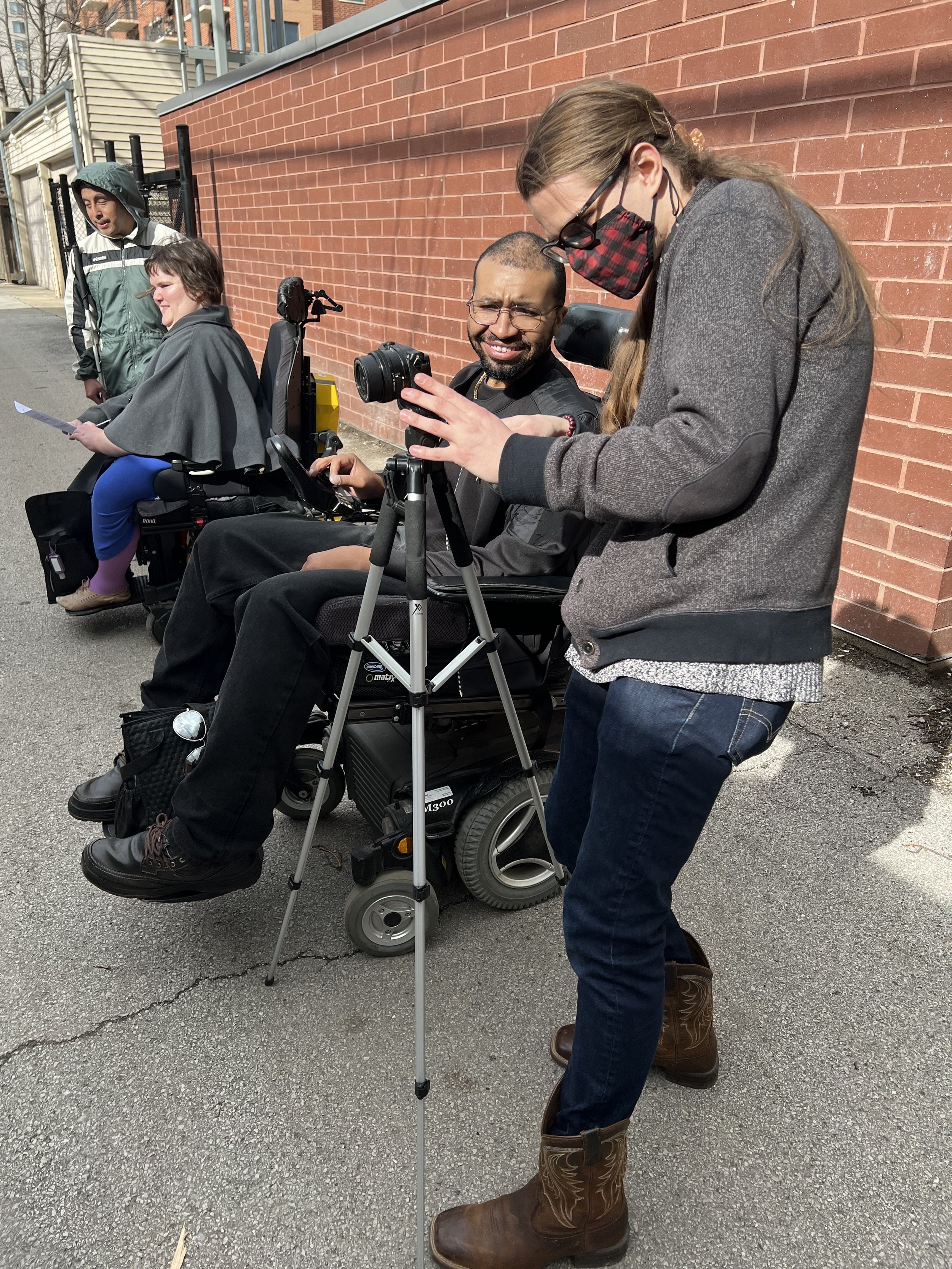

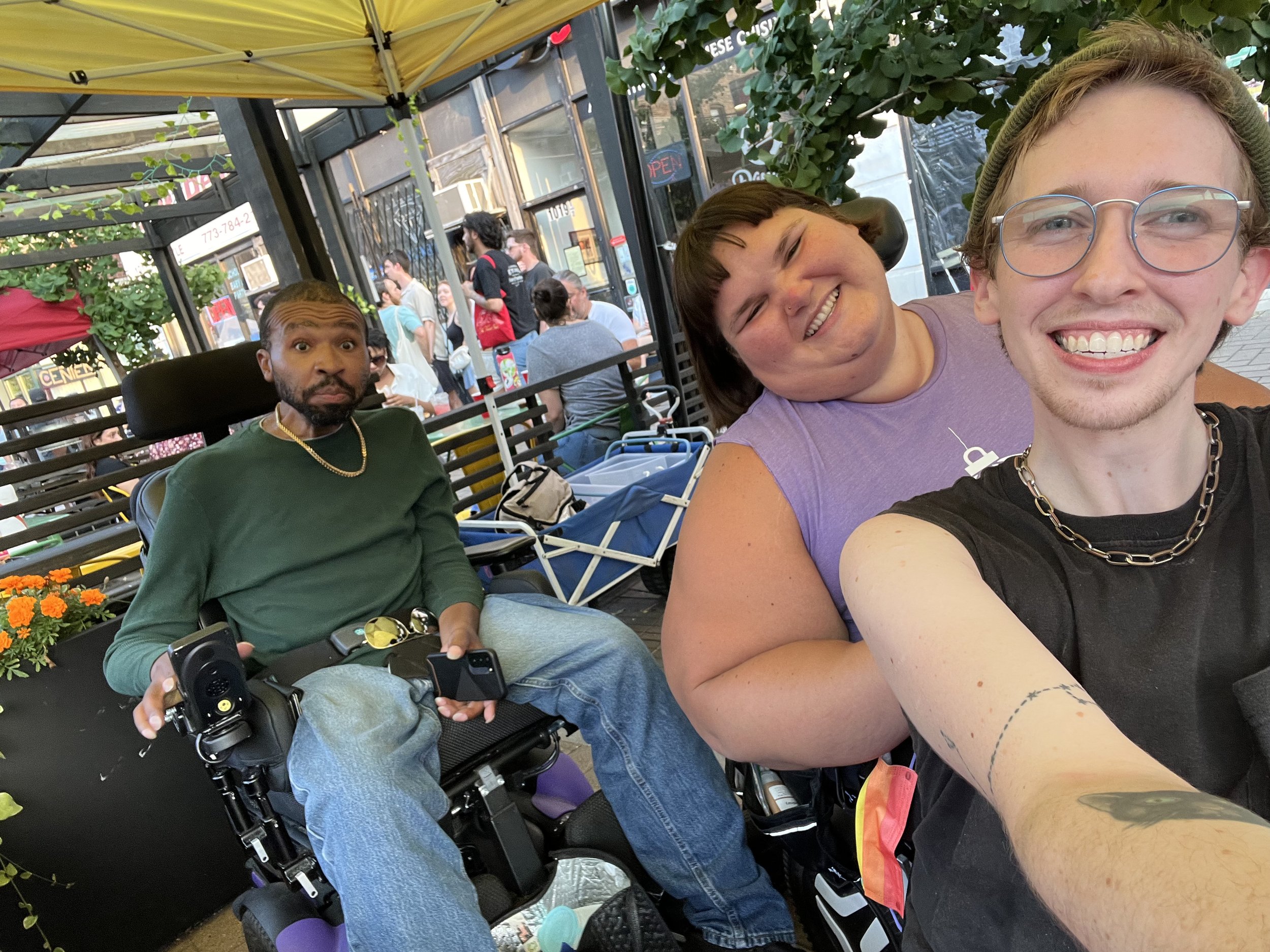

Image Description: Rows of images of Justin, a black man who uses a power wheelchair, with (1) Kennedy’s cat (2) Kennedy at an outdoor event (3) behind a camera with support people outside (4) dressed as a superhero with Kennedy and Kieran (5) tabling at a fair with Kennedy and Kieran and (6) dressed as a super hero with 4 others dressed as super heroes.
By Kennedy Dawson Healy
Sometimes in life you have an obligation to go to funerals of old relatives with bad behavior and politics. You have to dig to remember nice things about them. You sit in a circle of cousins and talk about the good candy they had at their house, or a funny story that was more about circumstance than their actual humor. When people like Justin Cooper die, it's the opposite feeling. His community has been flooded with devastation precisely because he was so good. You’d have to dig to find anything bad to say about Justin. Anything you’d find sounds like a bullshit answer he could have given at a job interview to the question “what are your weaknesses?” He was too nice, he gave way too much and took too little, he was stubborn in receiving care but not in giving it, he was idealistic about the world he wanted to create. When people inevitably die, we are taught to prop them up in eulogy. Our society finds ways to do this with even the most evil men in government. It's what you’re supposed to do. This eulogy is not of that category. Everything I am writing about this man, and his work, and the way he made people feel is honest and genuine and the truth.
I met Justin Cooper as a young person in disability movement work while interning at Access Living. He was a member of the Young Professionals Council there. We could never pinpoint the exact moment we met. But I remember one day the office was buzzing because he was coming to the building. After hearing this multiple times, I said “who is Justin?” Everyone responded with the tone of “who are you not to know who Justin Cooper is?” He had this effect on a space. I saw it until the very end when I visited him in his rehab facility and all the staff responded to my using of his full name with “oh, JC - he's in this room.” When he took a turn for the worse, I’d never seen a hospital waiting room fill to that size with such speed.
He was smart and funny and so charming. I am getting messages from people who barely knew him telling me so. My news feeds are full of memories and photos and people professing they had a crush on him. A lot of what I am going to say here has been said and I am going to say it again. Justin came from a family of activists and knew how to meet people where they were at and bring anyone into movement work. His sweetness was abolitionist praxis. A practice he is still teaching us. He knew tearing down big systems and building new ones is done one relationship at a time. Many people have written in recent days that he was their first contact with the disability community. Many have detailed a hard time when he was there for them. Everyone is reminding me that his laugh and giant smile and energy were infectious.
Justin loved art and creating things. His photography and film work shared perspectives on disability and accessibility with the world. He loved music, sports, a good steak, anime, his play station, and WWE. He loved his mom more than anything. And his community. He served in so many roles and projects for disability rights and justice work I won’t be able to list them all. But here is an attempt:
Young Professionals Council at Access Living
Advance Your Leadership Power at Access Living
Chicago Disability Pride Parade Planning Committee
Chicago Disability Activism Collective
Illinois Partners for Human Service Board
His own media company, Cooper Industries
Junior Artist In Residence for the Disability Culture Activism Lab
3Arts/Bodies of Work Residency Fellow
The best part of my endeavor with Crip Crap has been the work I did with Justin. I’m so grateful to have had a small but mighty podcast with him. I knew I needed Justin’s sharp perspective and buttery voice. I was shocked that he did not hesitate to agree to my risky plan of an unfunded project with the word crap in the title. We got close through our love for and belief in our work and crip community. The days he’d come over to record were the best. We’d make tea and eat snacks and he’d take photos of my cat to post alongside the episode graphics when they’d drop. He could get along with any guest I’d book. He had incredible insight and a familiarity with people that made everyone feel seen and close to him.
We also did two five-day film challenges together that Justin directed. The first was about a disabled superhero getting only ableist news coverage. The second year (where we overextended ourselves even more) was a pretty bad and silly reality TV puppet show. He’d come to table with me at events and we once shot an ad trying to guilt non-disabled people into giving us money by asking (doomy medical commercial style) if they suffer from able guilt. It was my bad idea that barely worked that Justin, again, went along with. We didn’t have enough money for our regular care needs, let alone someone to assist us with shooting a video. So my neighbor came down to set up a cheap tripod I had purchased which promptly fell minutes after he left. We laughed really hard as I tried to fix it and it continued to fall. Justin knew surviving ridiculous lives required laughter.
Our last times in person together were in his hospital and rehab hospital rooms. We got into a routine where I’d sneak into the cardiac ICU when he was staying there last and recline my wheelchair next to his bed and watch whatever he’d left on TV. He would wake up and try to entertain me and I’d scold him for scaring us with his most recent health drama and insist he rest and not worry about me. He would tell me it was nice to see a familiar face and then fall back asleep and then eventually wake up and tell me the intricacies of the Marvel movie ending on TV or that it was time for WWE or a basketball game. He’d let me bad mouth the institutions he was in as long as no nurses were within earshot. On one of his worse days in rehab I gave up trying to convince him of anything and we sat and looked out the window and talked about his life and liberation and god and the afterlife.
Our last work zoom call was with fancy documentary filmmakers who got the same grant as our podcast. There was an ice breaker asking what we had done on Memorial Day as the call was the day after. I answered honestly that I had gone to Sonic and watched Bridgerton with a friend. When it got to Justin’s turn (multiple people later) he said what he had been up to and then ended by joking “I guess Kennedy was at Sonic, but I didn’t get an invite.” I could feel the zoom room fall in love with him.
When I say Justin Cooper was too good for this world, I am talking about both its badness and his goodness and the relationship and gap between these two realities. The ways he stayed soft and kind and hopeful in a harsh world. How he wanted to fill this gap by bringing the world to his level. To make it a livable place for disabled people of color and all people. And how the care and other racist and ableist systems we live under failed Justin terribly especially at the end of his life. In the end, Justin was stubborn and proud and private and resistant. I am grateful to have been a part of Justin’s life and for the ways he did let me in. I am also so angry at the ways he was discarded by systems. We live in times where grief is extremely political. Justin had a way of synthesizing emotions like anger. He knew exactly how to transform bitterness through the work. I plan, like Justin, to store my anger and grief about him within future-building work. I know the best way to honor him is by continuing his work toward a world that deserves and can keep people like Justin. The kind of world he envisioned and was actively creating. If he were here, he'd invite you to join us with grace, generosity, ease, joy, and a bit of humor.
Donations to Justin’s memorial fundraiser can be made here: https://www.gofundme.com/f/justin-marcus-coopers-memorial-costs
Learn more about Justin below:
https://chicagoreader.com/city-life/people-issue/justin-cooper/
Freeing Palestine will Free us all: An American Crip Perspective on Breaking Rules Towards Better Futures
Our founder, Kennedy Dawson Healy, juxtaposes her self-advocacy at a recent hospital stay with the skill building required to end genocide in Palestine.
By Kennedy Dawson Healy
Content warning: hospitalization, pain, surgery, disability, abuse, suicide, care, genocide, Palestine
On April 22, I slept in my electric wheelchair at one of the best hospitals in the world – Chicago’s Northwestern Medicine. I have nine doctors through this medical system. It seems as though I am reminded how well ranked the hospital is every time I enter, get an e-mail from them, login to my online portal. Unfortunately for the medical establishment, Crips are done with surveys and letters when institutions with this level of renown and arrogance fuck us. Following Alice Wong, disability media trailblazer, we’re writing articles. Her work on medical mistreatment can be read here, here, and here.
I was at the hospital for a second procedure (the first from 2021) to remove kidney and bladder stones caused by my catheter. The catheter is a device I elected to have surgically implanted due to a lack of in-home care and accessible public restrooms. My doctor didn’t prescribe an antibiotic irrigation that could have prevented this because it is difficult to get insurance to cover it. Insurance crack down on disability products has escalated throughout my life.
Still the privilege of having access to a medical procedure where, with minimal pain, my doctor entered my bladder and kidney through my urethra is not lost on me. Especially after watching, from on the ground accounts like Bisan’s, hospitals in Gaza being blown to bits for months. People giving birth and getting amputations without pain medication or anesthesia. But genocide cannot become our baseline.
My procedure is not as invasive as the first. They consult my pulmonologist this time to get me the correct anesthesia for my neuromuscular disease. The procedure goes really well but is still hard on my lungs. I had been denied a private recovery room and the use of high quality masks for COVID prevention. I have to constantly advocate for staff to wear surgical masks.
I have been asking for these measures for weeks, as well as a pressure relieving bed for recovery overnight. This is the only kind of bed I have slept on for the last 12 years. I am moved from the cot, to an OR table, to a standard hospital bed. I am kept in recovery and told my bed is being cleaned for around 6 hours. I opted to be alone because that was about how long it took me to wake up last time with the bad anesthesia. I was only notified I would be staying overnight four days before the procedure. While the hospital provides inadequate care, the state will not provide care services to anyone while they’re hospitalized.
That morning, when we asked what time I would be able to access the good bed, my care worker and I snickered at the anesthesiologist saying it depended on “bed flow.” This is when I should have known I was screwed. I was on hard surfaces for 14 hours. I am transferred to my room and told I will get my bed there. My fat, gimpy body is more than ready for it. My healing requires my blood to flow. The pain from the bed is worse than the pain from the surgery despite both being masked by pain meds. Last time my bed was ready in my room. This time I am told it needs 12 hours to inflate and it is unlikely I will get it at all.
It is nearly 10:00 p.m. I have been at the hospital since 8:00 a.m. and got very little sleep the night before. I try rolling on my side. It is worse. I know that I am likely already marked crazy for my persistent mask requests. And, well, Audre Lorde tells us that our silence will not protect us. I leave my call button on. I yell from the room, pitted against other patients in pain. “Help. I need help.” I say I want to sleep in my wheelchair. I want to go home. Non-gimps who get this procedure are not required to stay overnight. They tell me my chair is a fall risk. I cannot walk. It has a recline feature, a seatbelt. I have never fallen out of my wheelchair on flat ground. I tell them this. I call the care worker who has my van, who was up at 4:00am to get me there for $17.25/hr. No answer. I call my mom who lives out of state. A social worker mother hits different when you’re 29 and she’s 63, but it's worth a shot. Institutions need to know when we have people outside who are paying attention. She tries to call the nurses station on two different phones but never gets through.
I call my care worker who is watching my cat to come up to the hospital. Their Uber from my house works faster than any actual results from the call button. They bring our friend who is with them and they begin putting the sling to my Hoyer lift underneath me, the first step in transferring me. Suddenly, a remote for the bed I am in Tylenol, water, and chapstick I’d been waiting hours for are now available to me. The nurse asks what we’re doing. I ask the nurse, who is waiting on approval from the doctor for each of my requests, if my friends transferring me reduces her liability. She says no. I say pretend I didn’t say that then. Realizing we’re going to do it anyway, the nurses come in and put me in my chair. It is relief to institutional abuse.
Medical settings are made for dealing with and erasing disability, but are never prepared for it. Staff are touted as heroes for managing the people no one else wants to, but don’t have the resources to properly do so. This is the latest in a line of my medical trauma. Trauma that runs as deep as early 2000s x-ray rooms I can barely remember in the Children’s Hospital where I was born and received much of my pediatric “care” in Omaha, Nebraska. This was neither my best nor worst medical experience. My medical and care chaos is normal Crip stuff. While my needs are high, they’re balanced with access to some care, insurance, social capital, family support, racial and class privilege, etc. None of these systemic problems are new – ableism is foundational to medicine.
And yet there was a time when things seemed to be getting better for some people. Under Obama, I had a political coming up in disability rights and justice movements with Crips that would tout our “lives worth living.” I even got roped into a Not Dead Yet action once where we used our wheelchairs to trap eugenicist doctors in an Embassy Suites. Conversations about Crip death were slippery slopes. These days, I have as many friends who want to be dead as I do friends who want to be alive. The hospital reminds me why. Pain and mistreatment makes it hard to have perspective around possibility. Much of this seemed to begin when disabled people, and other marginalized groups like service workers and BIPOC communities, were made the collateral damage of the pandemic. Collapsing home care and health care systems on top of this make living hard, while tens of billions of dollars are sent to Israel to carry out atrocities. I’ve been afloat since I got a vaccine and a cat, but some days I get not wanting be here. Most days I just want everyone to survive. Throughout my 20s, I’ve learned to look people who taught me how to be a political Crip in the eyes and say, sometimes through tears, “I can’t do this without you.”
“I’m so glad you’re here.”
“We need you. Let’s stay and fight.”
I know when the time comes, I will do whatever I can to help them die in their homes with dignity, not in an institution. It’s Crip code. Never in their own shit, call button unanswered. I will learn to say, “Thank you for all you’ve done.”
“Thank you for staying as long as you did.”
It’s not mine to determine, but I don’t think it’s time yet. I know that, like everyone, eventually my time will come too. Crips have a lot of pride but we also have a lot of experience with and proximity to death. I know I would not last long in conditions like those the U.S. and Israel are subjecting millions of Palestinians to, or in a climate induced crisis here. When my youngest care worker (who saved me up above) pitches building animal bladder pressure relief beds if war and climate ruin our electric systems (look what we have done to the brains of young people, y’all!), I tell them they will have to leave me and save the world.
But these futures are still ours to write.
Whether genocide is occuring in Gaza is not an argument I will entertain (do y’all hear yourselves??). The obvious relationships between Palestine and disability have been well documented (see here and here). At times, Americans die of COVID at a weekly rate of death that occurs over 2-3 days in Gaza. Facism builds on itself. Cop cities. Anti-trans legislation. Overturning of abortion. Freeing us all begins with freeing Palestine. When they come to save me in the hospital, my friend tells me about the first of growing faculty support for college protests for Palestine, including groups forming a circle around their students, holding hands, protecting them, and getting arrested. I cry. I say, “That’s really good news.” Encampments across the country form as I recover at home. Northwestern University is one of them. I wonder what ties my medical care has to genocides. A sign in my room said that Northwestern was an institution of health and healing. Abuse and intimidation will not be tolerated.
Right before my surgery, another care worker sent me a Tik Tok about breaking small rules so we can learn to break big ones. Of course, everyone’s positionality and experience informs their ability to take risks. I am grateful for the Crip practice in this.
I am not leaving unless.
I am leaving against medical advice unless.
I’ll be happy to talk to you about those risks once you put me in my wheelchair.
People pleasing as a survival mechanism has its ends. If you grew up othered, it can be hard to mark yourself other. But what if we leaned into the ways that we already are? What if we dealt with our shit so we could deal honestly with the world? What rules - big and small - can you break for Palestine? Like the students and faculty across the country, the bay area organizers who blocked the bridge and threw their car keys in the water, bus drivers that refused to support a pro-Israel protest in Detroit, global movements of port and transport workers refusing to handle or move weapons heading to Israel, the countless people who have lost or left their jobs. These are just some examples.
Like the actions of the students in encampments, our actions for Palestine will likely continue to be met with much support and resistance. Like many other schools, my alma mater, DePaul University, ordered police to brutalize its own students and destroy their encampment rather than divesting from companies that support Israel’s ongoing genocide of Palestinians. I am reminded of something my former professor, H Rakes, taught me at a 2014 divestment action there:
There are more of us.
You are allowed to take care of yourself AND collective care is going to get us so much farther. A lot of brave people are risking their futures AND all of our futures are at risk if we continue to normalize mass death. We did not individually do this AND we cannot allow it to continue.
The world is burning. Break all the rules. For the love of god, put on a mask. Shave your head, tell your crush you're crushing, look at people longer, kiss each other on the forehead, laugh, sing, dance, cry, grieve, be grateful to be together, clasp hands, link arms, and do whatever you can to stop this. We do not have to accept any of it.
This piece was written by our founder, Kennedy Dawson Healy. Read more about her on our team page.